
AIOps means artificial intelligence for IT operations. It applies techniques such as pattern detection and event correlation to operational data, helping teams investigate systems that produce more alerts than a person can easily review. It is not simply a chatbot attached to a server dashboard.
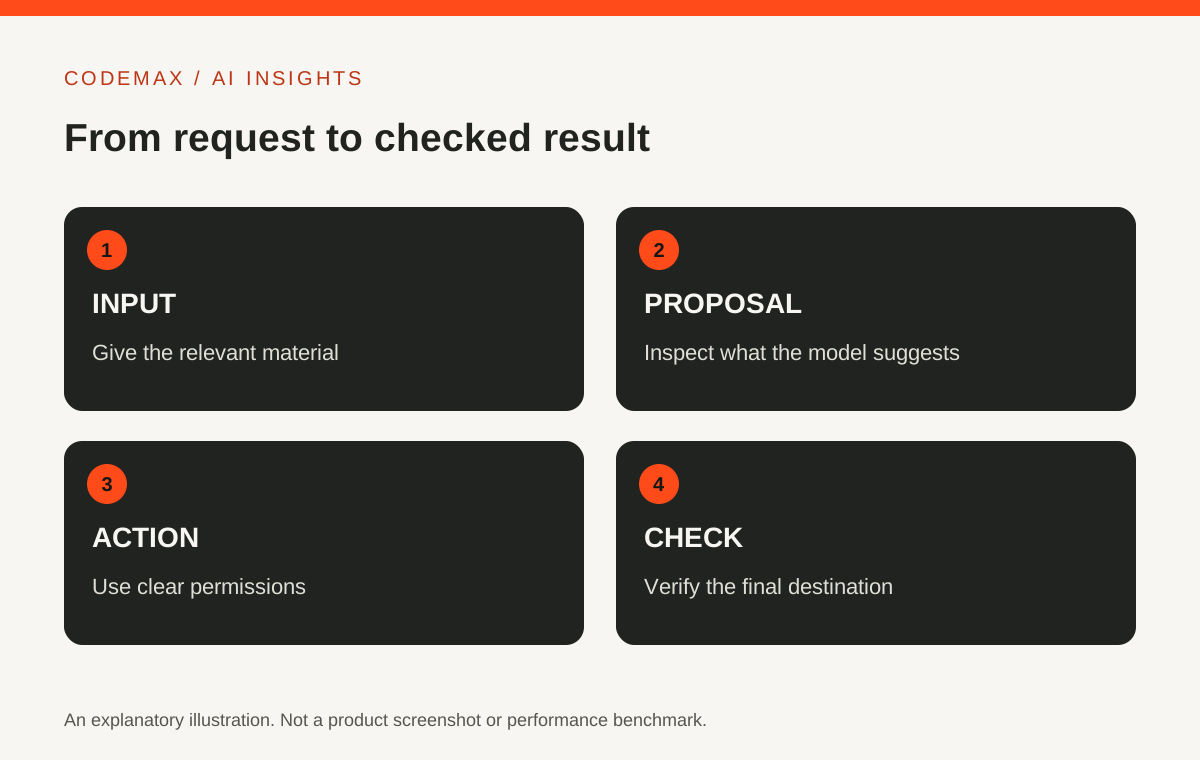
The problem starts with scattered signals
An application slowdown can trigger alerts from a database, a network monitor and several services at once. Those messages may describe symptoms of one incident. Grouping related events can help an operator form a useful picture rather than investigating every message independently.
IBM's AIOps material describes uses including event correlation and anomaly detection. Those are possible capabilities, not a guarantee that any particular tool can identify the cause of your incident. The quality and context of the data still matter.
Distinguish an anomaly from a cause
An unusual measurement tells you that something differs from the expected pattern. It does not automatically explain why. A traffic increase, a planned deployment or a broken sensor can all create unusual data. The same graph may support several hypotheses.
A sensible evaluation asks the tool to show the observations behind its suggestion. Compare the timeline with known changes and check the original logs. Treat a proposed cause as something to investigate until the evidence supports a conclusion.
AIOps and MLOps solve different problems
AIOps concerns the operation of IT services. MLOps concerns the lifecycle of machine-learning systems, including how models are developed, deployed and monitored. A team may use both, but the labels should not be swapped just because AI is involved.
For a practical example, detecting unusual application latency belongs to the operational problem. Managing the model that performs that detection belongs to the machine-learning lifecycle. Clarifying the distinction helps assign responsibilities and choose meaningful success measures.
Test on recorded incidents first
Take a set of past incidents with known outcomes. Ask whether the system groups the relevant alerts, identifies useful evidence and avoids flooding the operator with unrelated suggestions. Include ordinary busy periods so normal activity is not mistaken for a failure.
Keep the evaluation separate from the data used to configure the tool. Record missed incidents and false alarms as well as correct detections. A polished demonstration on one selected outage is not enough to justify automated changes to production.
Add action permissions gradually
Start with read-only assistance, such as summarising a timeline or recommending an investigation step. If you later allow remediation, define the permitted actions, approval conditions and rollback process. An incorrect restart can make an incident worse even when the explanation sounds plausible.
AIOps is most useful when it helps operators reason from evidence and complete a controlled response. Measure whether investigation becomes clearer and recovery more dependable. The number of generated recommendations is a poor substitute for that outcome.
Sources and further reading
Source-based explainer researched on 1 October 2026. Product features and availability can change. Examples are illustrative unless identified as reported research.
Explore more AI news and insights or browse the CodeMax journal.