
AI is an umbrella term for systems that perform tasks associated with intelligence, including recognising patterns, generating content and choosing actions. It is not one product or a single ability. Understanding what a system is actually doing makes it easier to decide when its output is useful and what still needs checking.
Three jobs hidden behind the same label
A prediction system estimates something: whether a photo contains a particular object or whether demand may increase. A generative system produces an output such as a paragraph, image or piece of code. An action-taking system can use tools to change something outside the conversation, such as updating a document.
These jobs can overlap in one application. Imagine planning an exhibition: one feature groups your photographs, another drafts captions, and a connected tool creates a catalogue. The app may call all three AI, but each step needs a different check. Correct grouping does not establish accurate captions, and good captions do not prove the catalogue was saved correctly.
Training and everyday use are different stages
During training, a machine-learning system adjusts internal parameters using examples or other feedback. During use, often called inference, it applies the resulting model to new input. Giving an assistant more context in a conversation is not necessarily the same as retraining its underlying model.
This distinction matters when someone says a tool learns your preferences. It may be storing instructions, retrieving past information or using context in the current session. Ask what information is stored and how to change it. The friendly word learning does not describe every mechanism precisely.
A simple way to test an AI feature
Choose a task where you can recognise a good result. For example, provide a short passage and request a summary containing only facts in that passage. Compare the output against the original, including names, numbers and qualifications. Record omissions and additions rather than judging only how polished it sounds.
Then change one condition. Try a longer passage or a document with an ambiguous sentence. A feature that performs well once may behave differently on a less tidy input. This small exercise will not establish overall reliability, but it gives you more useful evidence than a promotional example.
Ask what happens when it is wrong
An incorrect brainstorming suggestion is usually easy to discard. An incorrect action in a connected account may be harder to reverse. Match the level of review to the consequences. Keep meaningful approval steps around actions that affect other people, money or important records.
AI can be helpful without being infallible or human-like. The practical question is whether a particular system improves a particular task under conditions you understand. Start there, and claims about revolutionary intelligence become easier to assess.
Your first AI reading checklist
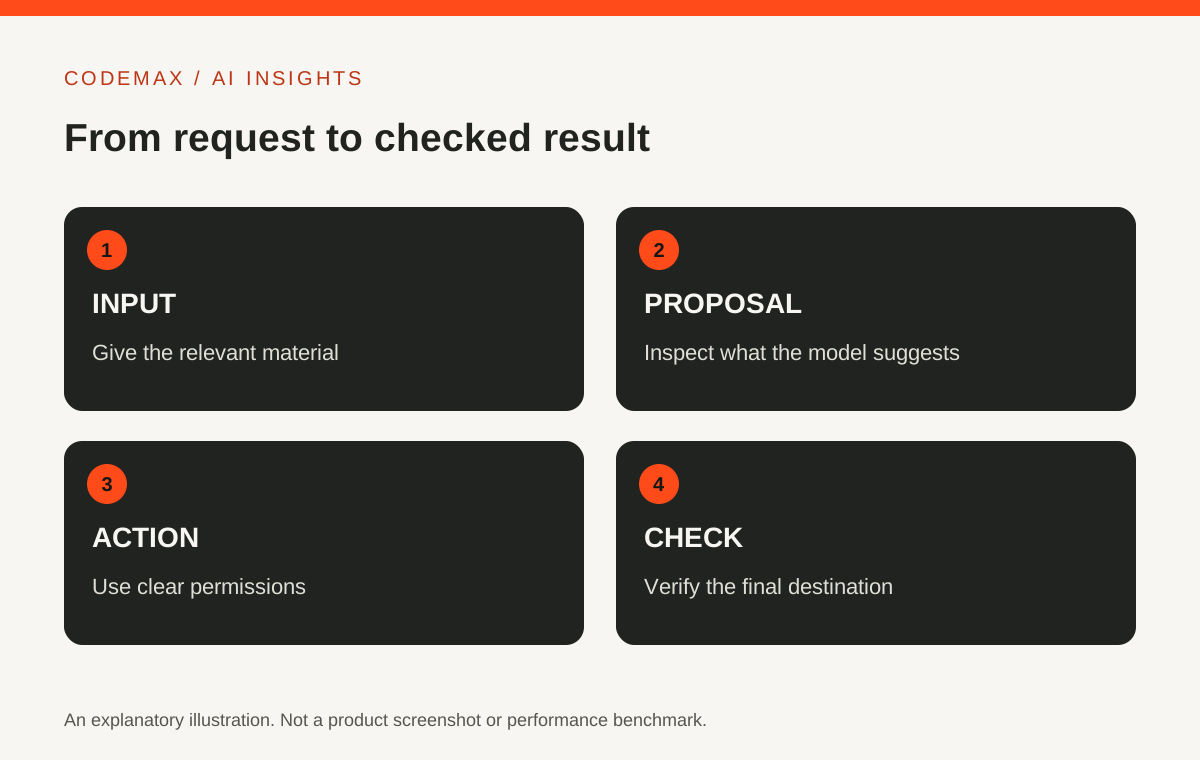
When you encounter a new announcement, identify the input, output and user control. Find the original documentation, distinguish a demonstration from a released feature, and check whether the author reports an actual test. Those habits will serve you across changing model names and product launches.
Sources and further reading
Source-based explainer researched on 30 September 2026. Product features and availability can change. Examples are illustrative unless identified as reported research.
Explore more AI news and insights or browse the CodeMax journal.