
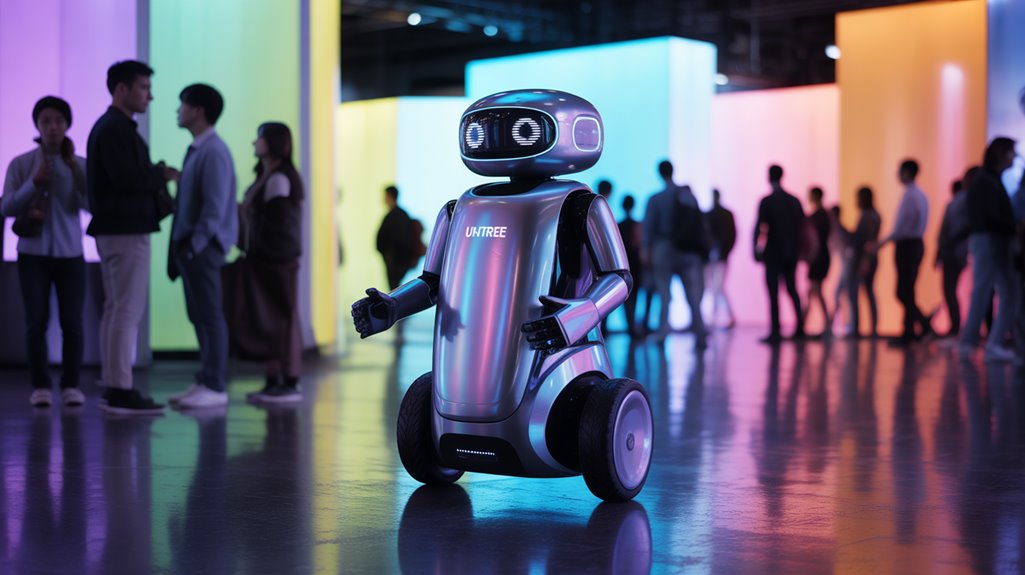
Unitree's R1 marks a pivotal moment in accessible humanoid robotics. It combines advanced mobility with versatility, capable of various dynamic movements and responsive voice interaction. Priced at $5,900, it caters to developers, educators, and researchers while fostering innovation. Weighing 55 pounds and equipped with 26 functional joints, the R1 offers basic functionalities that rival more expensive models. As the landscape of robotics evolves, the R1 paves the way for exploration, inviting insights into future implications.
The Versatile Capabilities of the R1
The R1 humanoid robot from Unitree Robotics exemplifies a remarkable blend of versatility and functionality, showcasing a range of impressive capabilities. This innovative creation is designed for both training applications and entertainment uses, enabling users to explore various interactions. Its ability to walk, run, and perform dynamic movements like dancing and kung-fu kicks enhances its appeal in educational settings, where it can assist in teaching robotics concepts. Additionally, the R1's responsive voice command feature allows for engaging user experiences, making it a versatile tool for developers and a enchanting companion for entertainment, pushing the boundaries of humanoid robotics.
Target Audience and Market Appeal
Unitree's R1 humanoid robot is strategically positioned to attract a diverse range of users, from developers and tech enthusiasts to educational institutions and research labs. Its affordability at $5,900 aligns with current market trends emphasizing accessible technology. The R1 appeals to target demographics interested in robotics for education, research, and practical applications, such as home assistance and entertainment. By encouraging innovation and exploration, Unitree taps into the growing demand for user-friendly robotic solutions. As the robotics industry evolves, the R1 stands out as an exemplary model that democratizes access to humanoid technology, fostering creativity and practical experimentation among its users.
Technical Specifications and Features
R1 humanoid robot showcases an impressive array of technical specifications and features that enhance its functionality and usability. Standing at 47.6 inches and weighing 55 pounds, it employs advanced mobility mechanics through 26 functional joints. The integration of sensors allows for agile movement and interaction, enabling tasks such as walking, running, and even dancing. Powered by a lithium battery, the R1 operates for approximately one hour, optimizing energy use. Its remote control enhances safety, allowing for quick shutdowns. This combination of sensor integration and sophisticated mobility mechanics positions the R1 as a versatile tool for developers and educators alike.
Comparative Analysis With Other Models
When comparing the R1 humanoid robot to other models within Unitree's lineup, significant distinctions emerge, particularly regarding cost, complexity, and target applications. The R1 emphasizes accessibility, making it an attractive option for users seeking affordability. Key differences include:
The R1 humanoid robot stands out for its affordability and user-friendly design, catering to educational and light research needs.
- Affordability Comparison: R1 priced at $5,900 vs. G1’s $16,000.
- User Experience: R1’s simplified interface enhances usability.
- Target Applications: R1 is suited for educational and light research, unlike the G1.
- Complexity Level: R1 offers basic functionalities compared to the advanced capabilities of the G1.
These factors position the R1 as a game-changer in humanoid robotics.
The Future of Humanoid Robotics and Its Implications
As advancements in technology continue to reshape various industries, the future of humanoid robotics presents both exciting possibilities and significant challenges. The evolution of human robot interaction raises intriguing prospects for enhancing daily life, from companionship to assistance in various settings. However, ethical considerations must be addressed, such as the implications of autonomy, privacy, and potential job displacement. As humanoid robots like Unitree's R1 become more accessible, society must navigate these complexities to guarantee responsible development and integration. Balancing innovation with ethical frameworks will be essential in harnessing the benefits of humanoid robotics while safeguarding fundamental human values.
Frequently Asked Questions
What Is the Warranty Period for the R1 Robot?
The warranty details for the R1 robot remain unspecified. Customers seeking assistance or clarification are encouraged to contact customer support, ensuring they receive thorough information regarding coverage and potential maintenance for their innovative humanoid technology.
Can the R1 Connect to Smart Home Devices?
Smart home integration sparks significant interest; however, the R1's device compatibility remains unclear. Users may find limitations in connecting to various smart home systems, potentially hindering its role as a versatile household companion.
Is Software Development Available for the R1?
Software development for the R1 includes extensive software customization options and programming resources. This allows users to tailor functionalities and enhance the robot's capabilities, fostering creativity and innovation in diverse applications and user experiences.
What Is the Charging Time for the R1?
Despite concerns over charging times, the R1 demonstrates impressive charging efficiency. The battery typically requires around two hours to fully charge, optimizing its lifespan while ensuring users can quickly resume engaging with this innovative humanoid robot.
Are There Plans for Future Upgrades or Models?
Future innovations may include model variations that enhance functionality, integrate advanced AI, and improve user interaction. Such developments could broaden applications, catering to diverse needs within educational and research settings, while fostering creativity and exploration.