
The best AI for one task may be a poor fit for another. Writing, coding, image creation and searching private documents involve different inputs and different ways of checking the result. A useful comparison begins with your work, not a leaderboard or a promise that one tool can do everything.
Choose three representative tasks
Pick examples you perform regularly. A writer might choose an outline, a rewrite and a summary. A developer might choose explaining an error, proposing a small change and reviewing a test. Keep the examples specific enough that you can judge the output.
Use the same source material and constraints for each tool where possible. Record which features were enabled. Comparing a tool with web access against one without it can be useful, but the difference should be visible in your notes rather than hidden inside a single score.
Define good before looking at the answers
Write a short checklist for each task. A summary might need to preserve dates, names and qualifications without inventing facts. A design brief might need to reflect the audience and include the required deliverables. A coding task should be checked in an appropriate test environment.
Separate factual correctness from presentation. A beautifully formatted answer can still fail the task. Conversely, a rough but accurate answer may need only a small amount of editing. Decide which properties matter most for the intended use.
Count the work left for you
Track how much correction and verification each result requires. Also note whether you can understand and edit the output. A tool that produces an impressive first draft but leaves you unable to maintain it may be a poor practical choice.
Try a second run with a meaningful variation. Change the document length, add a conflicting instruction or remove a helpful detail. You are looking for patterns in performance, not proving a universal ranking from a handful of examples.
Compare access and cost in context
Check the features available in the actual plan you would use. Include usage limits, export options, account controls and any separate connected services. Look up current terms directly; a free trial and a permanent free allowance are different arrangements.
You may decide that two specialised tools are useful, or that one familiar assistant is sufficient. The purpose of the exercise is to support a decision, not to collect subscriptions. Avoid paying for an advanced feature until you can identify the task it improves.
Keep your conclusion narrow and useful
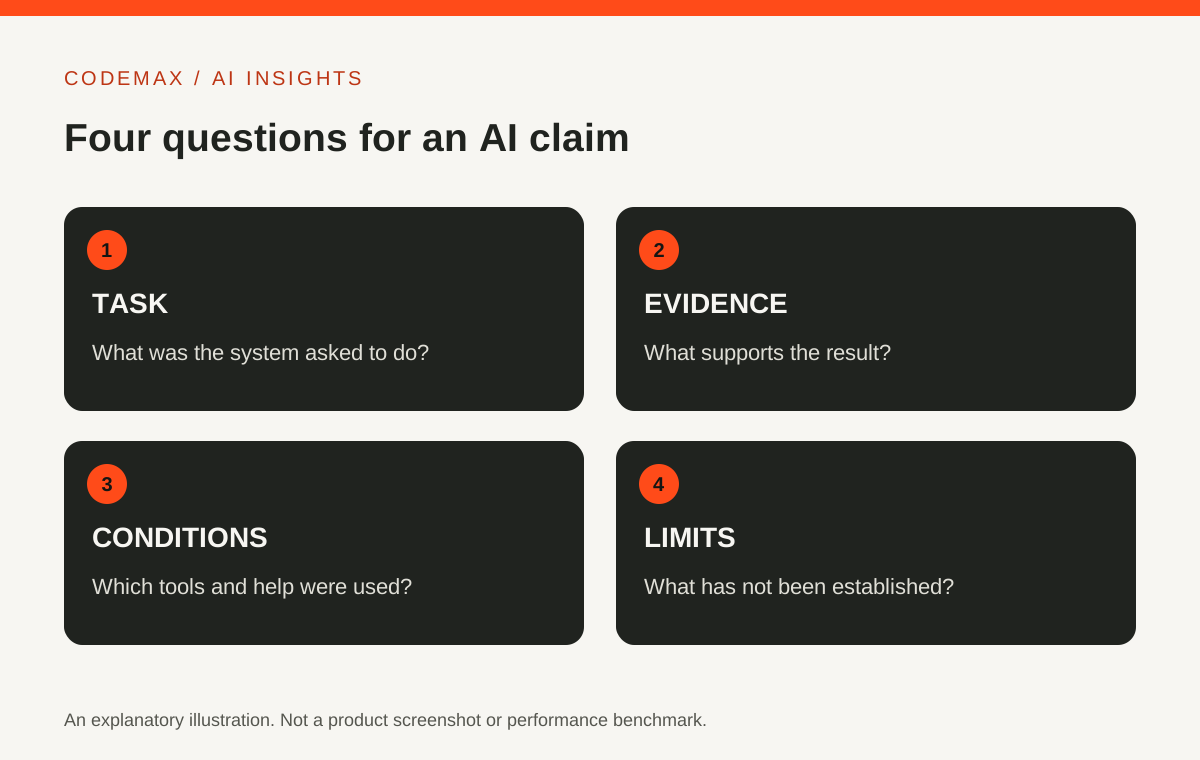
Write a result such as: this tool helped with these tasks, under these conditions, with these corrections. That is more informative than declaring a permanent winner. Revisit the comparison when your needs or the products change.
Good AI is not defined only by the quality of a demonstration. It includes whether you can verify the result, control the data and complete the work with less friction. NIST's current draft TEVV-Athlon framework describes customised assessments built around organisational objectives and real-world outcomes; your small comparison is a practical starting point, not a formal certification.
Sources and further reading
Source-based explainer researched on 3 October 2026. Product features and availability can change. Examples are illustrative unless identified as reported research.
Explore more AI news and insights or browse the CodeMax journal.