
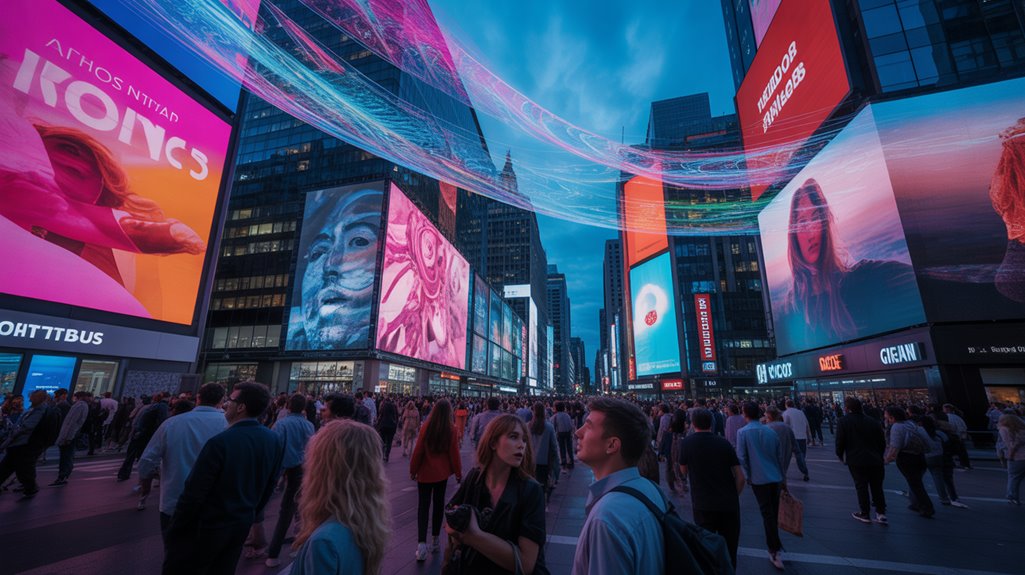
AI-generated advertisements are reshaping the marketing landscape by embracing chaos and creativity. This innovative approach allows brands to interact with consumers through visually dynamic content. For instance, Coca-Cola employs polished AI creativity, while Kalshi adopts a chaotic style with a low budget, showcasing diverse strategies. Such visual chaos not only challenges traditional design norms but also fosters unprecedented storytelling. This transformation prompts brands to reflect on how to balance innovation with authenticity, hinting at future implications for advertising.
The Rise of AI-Generated Advertisements
As brands increasingly seek innovative ways to engage consumers, the rise of AI-generated advertisements has emerged as a transformative force in the marketing landscape. This evolution reflects current AI trends, where creativity intertwines with technology, enabling diverse advertising styles. Major brands are now experimenting with AI, showcasing works that range from polished visuals to chaotic aesthetics. Kalshi's NBA ad exemplifies this shift, produced rapidly and cost-effectively, highlighting the potential for low-budget creativity. As the advertising landscape continues to evolve, AI-generated content promises to reshuffle traditional paradigms, allowing brands to explore uncharted territories in consumer engagement.
Case Study: Coca-Cola vs. Kalshi
While both Coca-Cola and Kalshi have ventured into the domain of AI-generated advertisements, their approaches illustrate contrasting philosophies and aesthetic choices. Coca-Cola's high-production Christmas 2024 ad exemplifies polished AI creativity, reinforcing its brand identity through lifelike graphics and emotional storytelling. In stark contrast, Kalshi’s chaotic NBA ad embraces imperfections, fostering a surreal experience that captivates viewers. This unorthodox style, produced on a mere $2,000 budget, highlights the freedom AI tools offer in reimagining brand narratives. Ultimately, these divergent strategies underscore how AI can either reinforce traditional brand identities or challenge conventions, showcasing the versatility of AI creativity in advertising.
The Creative Potential of AI Tools
A growing number of brands are harnessing the creative potential of AI tools to revolutionize their advertising strategies. By utilizing creative algorithms and generative design, advertisers can produce compelling content that transcends traditional boundaries. These tools enable rapid experimentation, allowing brands to explore diverse visual styles with unprecedented freedom. The ability to generate unique imagery and narratives at minimal cost fosters an environment where creativity can flourish without the constraints of conventional production methods. As brands embrace this innovation, they reveal new avenues for storytelling, ultimately transforming the landscape of advertising into a more dynamic and engaging experience for consumers.
Understanding Visual Chaos in Advertising
The rise of creative AI tools has paved the way for a new visual language in advertising, characterized by what is commonly referred to as "visual chaos." This aesthetic is marked by rapid scene changes, glitchy shifts, and emotionally jarring cuts, all of which challenge traditional norms of design and storytelling. By embracing chaotic design, brands engage audiences through unexpected visual storytelling that captivates and disorients. This approach not only fosters innovation but also reflects a desire for freedom in creativity. Ultimately, visual chaos serves as a powerful tool, inviting brands to break free from conventions and explore uncharted territories in advertising.
Cost-Effective Strategies for Brands
Numerous brands are discovering that cost-effective strategies can greatly enhance their advertising efforts without sacrificing creativity or impact. By leveraging budget optimization techniques and innovative tools, companies can reduce traditional production costs while maintaining high-quality output. For instance, AI-generated content allows brands to experiment with diverse visuals and styles without extensive resources. The ability to rapidly create and iterate on ads fosters a dynamic approach that resonates with audiences. This freedom enables brands to push creative boundaries, ensuring that their messaging remains relevant and engaging, all while adhering to budget constraints in an increasingly competitive advertising landscape.
The Role of AI in Future Advertising Campaigns
As brands increasingly embrace AI in advertising, the potential for transformative campaigns becomes evident. By leveraging advanced personalization strategies, companies can create hyper-targeted content that resonates with individual consumers. However, such innovation raises critical ethical considerations regarding data privacy and algorithmic bias. Brands must navigate these complexities to maintain trust while experimenting with AI-generated content.
- Enhanced creativity through AI-driven insights
- Real-time A/B testing for optimized results
- The challenge of maintaining ethical standards in personalization
This balance between innovation and responsibility will shape the future landscape of advertising, fostering a new era of engagement and connection.
Balancing Innovation and Brand Trust
While innovation in advertising is crucial for capturing consumer attention, brands must also navigate the delicate balance of maintaining trust. This equilibrium greatly influences brand perception, as unconventional AI-generated ads can polarize audiences. Effective audience engagement relies on authenticity; therefore, brands embracing chaos must guarantee their innovative approaches resonate with core values. Data indicates that while fresh aesthetics may enhance visibility, they risk undermining trust if perceived as inauthentic. Ultimately, the challenge lies in leveraging AI’s creative potential while safeguarding brand integrity, fostering a relationship with consumers that thrives on both innovation and reliability in a rapidly evolving landscape.
Frequently Asked Questions
How Can Small Businesses Leverage AI for Advertising Effectively?
In a vibrant digital landscape, small businesses can harness AI to craft personalized ads, targeting specific audiences with precision. This approach fosters deeper connections, driving engagement while maximizing limited budgets through innovative and tailored marketing strategies.
What Ethical Considerations Arise With Ai-Generated Advertisements?
Ethical considerations surrounding AI-generated advertisements include bias detection, transparency issues, and accountability frameworks. Additionally, data privacy and consent management are essential, alongside preserving creative integrity, ensuring brands responsibly navigate the evolving landscape of digital advertising.
Can Ai-Generated Ads Cater to Specific Cultural Contexts?
AI-generated ads can indeed cater to specific cultural contexts. For example, a localized ad campaign for Diwali, featuring culturally sensitive visuals and messaging, effectively resonates with the audience, showcasing the potential of targeted, culturally aware advertising strategies.
How Do Consumers Perceive Ai-Generated Versus Traditional Ads?
Consumers often perceive AI-generated ads as less authentic, impacting consumer trust. Traditional ads typically evoke familiarity, while AI's chaotic creativity can intrigue but may challenge perceptions of brand integrity and emotional connection.
What Role Does User Feedback Play in Refining AI Ad Content?
User feedback is essential for refining AI ad content, driving ad optimization through real-time insights. This iterative process enhances creativity, enabling brands to align their messaging with audience preferences while maintaining a dynamic, innovative approach to advertising.