
The humble business card – remember those little rectangles of networking power? In our increasingly digital world, it might seem like a relic, but for Australian professionals, it remains an incredibly potent tool for making a memorable first impression. A well-designed, high-quality business card isn’t just about sharing contact details; it’s a tangible extension of your brand, a physical handshake that lingers long after you’ve moved on. But there’s a common stumbling block many businesses face, particularly when ordering online or from overseas: getting the business card size right for the Australian market. This seemingly minor detail can have a major impact on professionalism and practicality. This guide will cut through the confusion, clarifying the definitive Australian standard business card size to help you avoid common pitfalls and ensure your cards always hit the mark.
The Definitive Australian Standard: What You Need to Know
Let’s get straight to the brass tacks: the standard Australian business card dimensions are 90mm x 55mm. For those who prefer imperial measurements, that translates to approximately 3.54 x 2.17 inches. This is the widely accepted and expected size by professional printers, graphic designers, and, crucially, by your potential clients and partners across Australia.
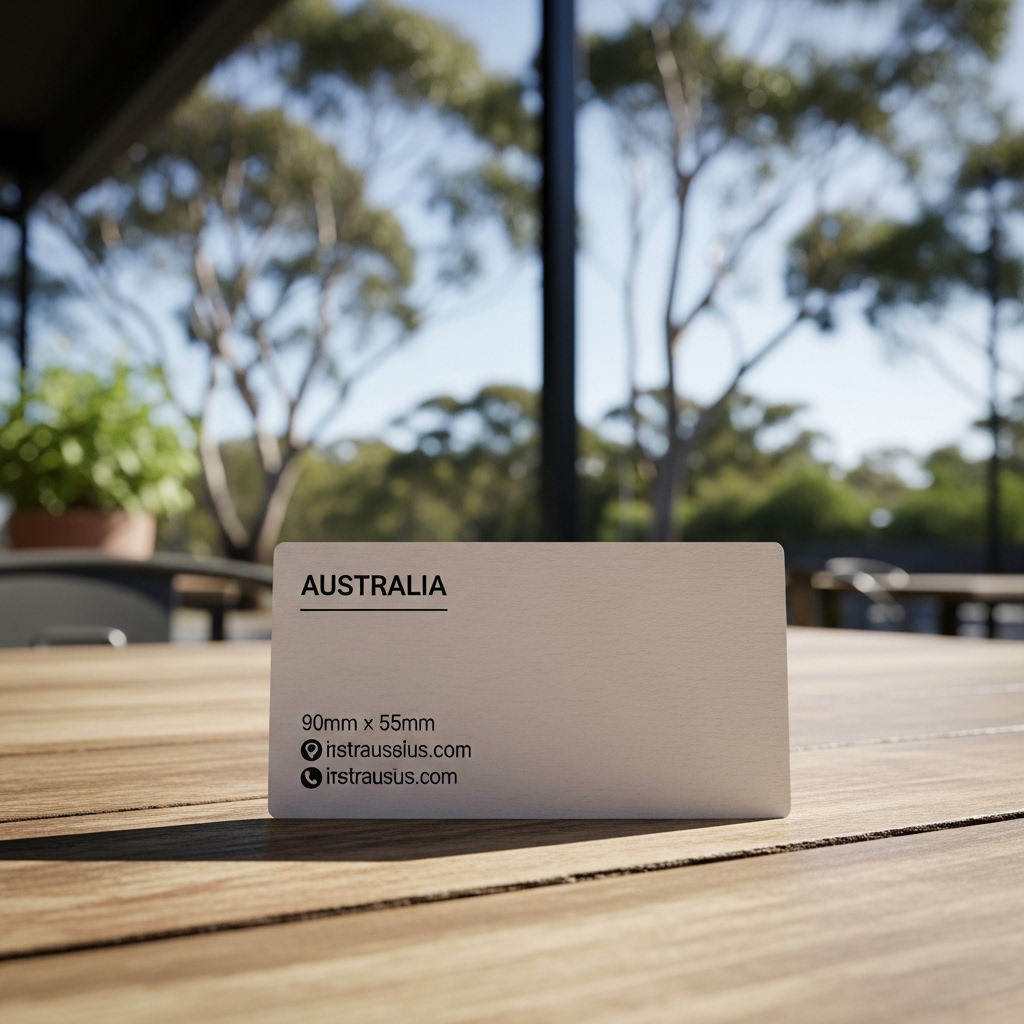
It’s vital to note that this isn’t a universal standard. Many international businesses operate with different dimensions. For instance, the US standard is typically 3.5″ x 2″ (approx. 89mm x 51mm), while much of Europe uses 85mm x 55mm. This subtle difference is where many Australian businesses get caught out. Our local size is largely influenced by the need for cards to comfortably fit into standard Australian wallets, cardholders, and desk organisers – a practical consideration that makes a big difference in how your card is received and retained.
Why Australian Standard Size Matters (Beyond Just Looking Good)
While an aesthetically pleasing card is important, adhering to the Australian standard business card size offers practical benefits that extend far beyond mere appearance:
Professionalism and Credibility: Handing over a card that feels ‘right’ – that fits perfectly in a recipient’s hand and existing card storage – subtly signals attention to detail and a commitment to professionalism. A card that’s too big or too small can feel awkward and less polished.
Practicality for Recipients: This is a big one! An Australian-sized card effortlessly slots into standard wallets, business card holders, and filing systems. A non-standard size, by contrast, might get folded, bent, or worse, discarded because it’s inconvenient to store. You want your card to be kept, not chucked!
Printer Compatibility: When you use the correct 90mm x 55mm dimensions, you ensure your design is perfectly compatible with local Australian printers. This minimises the risk of rejections, unexpected cropping, or extra charges for resizing. For Australian businesses seeking expert guidance on this topic, partnering with a specialist firm like Codemax can provide a significant competitive advantage in ensuring your print-ready files are spot on.
Design Consistency: Graphic designers can optimise layouts for the specific 90mm x 55mm canvas, ensuring that your logo, text, and graphics are balanced, readable, and visually impactful. Deviating from this can throw off carefully crafted designs.
Key Printing Considerations for Your 90mm x 55mm Card
Once you’ve nailed the business card size, understanding these printing terms is crucial for a flawless final product:
Bleed Area: This is extra design space that extends beyond the edge of your finished card. Typically 2-3mm, the bleed ensures that if there’s any slight shift during the cutting process, you won’t end up with unsightly white edges where your design should be. Always design with bleed!
Trim Line: This is the imaginary line where your card will be cut to its final 90mm x 55mm size. All your important content should be well within this line.
Safety/Quiet Zone: To prevent accidental cropping of crucial information, it’s recommended to keep all important text, logos, and critical design elements at least 3-5mm inside the trim line. This provides a safe margin, giving your design a clean, professional finish.
Resolution: For crisp, sharp images and text, your design files should be at a minimum of 300 DPI (dots per inch). Anything lower will result in pixelated or blurry elements, instantly undermining your professional image.
Colour Mode: Always design your business cards in CMYK (Cyan, Magenta, Yellow, Black) colour mode, not RGB. RGB is for screens, while CMYK is the standard for print. Using RGB for print can lead to unexpected colour shifts when your cards are produced.
Designing for the Australian Standard: Tips and Best Practices
Making the most of your 90mm x 55mm canvas is an art. Here are some tips for a truly impactful design:
Layout Optimisation: Utilise both sides of the card. One side for your logo and key branding, the other for contact details. Don’t be afraid of white space – it helps important information stand out.
Font Size and Readability: Aim for a minimum font size of 7-8pt for contact details, ensuring legibility. Headings or names can be larger. Choose professional, clear fonts that align with your brand.
Strategic Placement of Information: Your logo should be prominent. Your name and title, contact number, email, website, and relevant social media handles (if applicable) should be easy to find. Prioritise clarity over cramming.
Integrating QR Codes: If you use QR codes, ensure they are large enough to be easily scannable and placed strategically so they don’t overpower or get cut off from the design. Test them before printing!
Considering Card Stock and Finish: The tactile feel of your card speaks volumes. Consider different card stocks (e.g., matte, gloss, recycled, textured) and finishes (e.g., spot UV, foiling, embossing) to enhance perceived quality and differentiate your brand.
Branding Consistency: Your business card is a cornerstone of your brand identity. Ensure its design, colours, and fonts are consistent with your overall branding, from your website to your email signature. Just as a perfectly sized business card makes a great first impression, a professionally developed website, like those crafted by Codemax, ensures your digital presence is equally impactful.
Want to dive deeper into business card design? Check out some expert tips here:
Common Mistakes to Avoid When Ordering Business Cards in Australia
Even with the right knowledge, it’s easy to make mistakes. Here are the common pitfalls to steer clear of:
Using Incorrect Dimensions: This is the most significant pitfall. Always, always specify 90mm x 55mm when ordering from a local printer, or carefully adjust your design files if using international templates.
Forgetting Bleed/Safety Margins: Neglecting these can lead to critical information being cut off or unattractive white borders around your design. Don’t skip these crucial steps.
Low-Resolution Graphics: Pixelated logos or blurry images are instant professionalism killers. Ensure all your design elements are at 300 DPI or higher.
Overcrowding the Card: Resist the urge to cram every piece of information onto your card. Less is often more; a clean, concise design is far more effective.
Not Proofreading: A simple typo on your name, email, or phone number can render your card useless and make you look careless. Get multiple sets of eyes to proofread before printing.
* Choosing Poor Quality Stock: Flimsy, thin cards undermine your professional image. Invest in decent card stock that feels substantial and reflects the quality of your business.
Conclusion: Your Professional Impression Starts Here
In the bustling Australian market, a professional and well-executed business card remains an indispensable networking tool. By understanding and adhering to the definitive Australian business card size of 90mm x 55mm, you’re not just getting a measurement right; you’re investing in your brand’s credibility, practicality, and overall impression. Coupled with thoughtful design and an understanding of printing essentials, your business card transforms from a simple contact detail dispenser into a powerful, tangible asset for your business.
Get it right the first time and make your business card a true asset for your Australian business. For expert digital solutions and advice on presenting your brand professionally online, visit Codemax today and let’s make your first impression count, both on and offline.